In-Toeing & Out-Toeing in Children Expert Gait Correction in Toronto
In-Toeing and Out-Toeing in Children: Causes, Symptoms, and When to Seek Help
If you’ve noticed your child’s feet turning inward or outward while walking or running, you’re not alone. In-toeing (“pigeon-toed”) and out-toeing (“duck-footed”) are common walking patterns in children.
While these gait variations can cause concern for parents, they are usually part of normal development and often resolve on their own.
What Are In-Toeing and Out-Toeing?
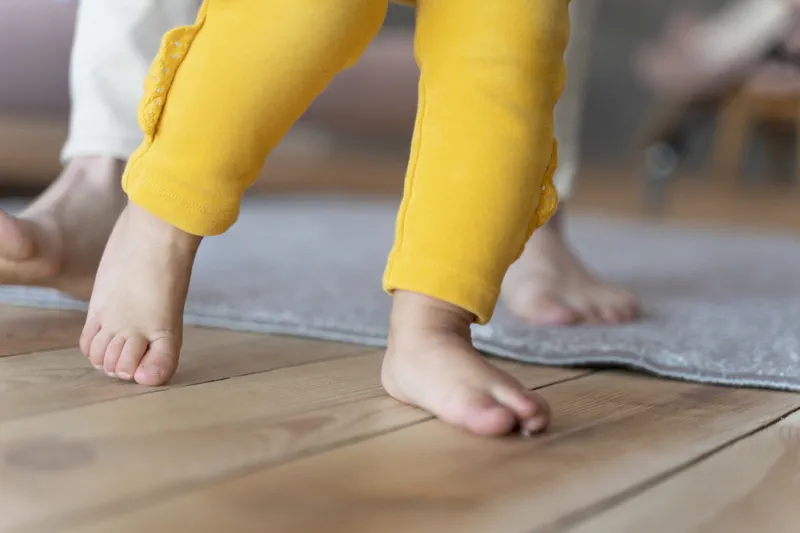
- In-toeing occurs when a child’s feet point inward while walking or running.
- Out-toeing is when the feet point outward.
Both patterns are most noticeable when children begin to walk and are often observed during play or routine activities.
Symptoms and Signs
Most children with in-toeing or out-toeing:
- Walk, run, and play without pain.
- Have normal strength and coordination.
- Do not experience delays in motor milestones.
When to Watch for Problems:
- Persistent pain or limping.
- Tripping or frequent falls.
- Gait asymmetry (one foot turns more than the other).
- Stiffness, swelling, or difficulty moving the hip, knee, or foot.
- Gait that worsens or does not improve with age.
Your Feet Deserve Professional Care
Book your appointment today and take the first step toward healthier, pain-free feet.
What Causes In-Toeing in Children?
In-toeing can result from several developmental factors:
- Metatarsus Adductus
- The foot itself curves inward.
- Most common in infants and young toddlers.
- Often due to the baby’s position in the womb.
- Internal Tibial Torsion
- The shinbone (tibia) twists inward.
- Frequently noticed when toddlers start walking.
- Typically improves by age 5.
- Femoral Anteversion
- The thigh bone (femur) turns inward.
- More common in children ages 3–8.
- May cause children to sit in a “W” position.
Genetics can also play a role, as these gait patterns often run in families.
What Causes Out-Toeing in Children?
Out-toeing is less common but can be caused by:
- External Tibial Torsion
- The shinbone twists outward.
- Usually becomes noticeable in preschool or early school-age children.
- Femoral Retroversion
- The thigh bone rotates outward.
- Flat Feet
- Flat arches can cause the feet to roll outward.
- Hip or Neuromuscular Conditions
- Rarely, out-toeing can be linked to underlying neurological or muscular issues.
Symptoms and Signs
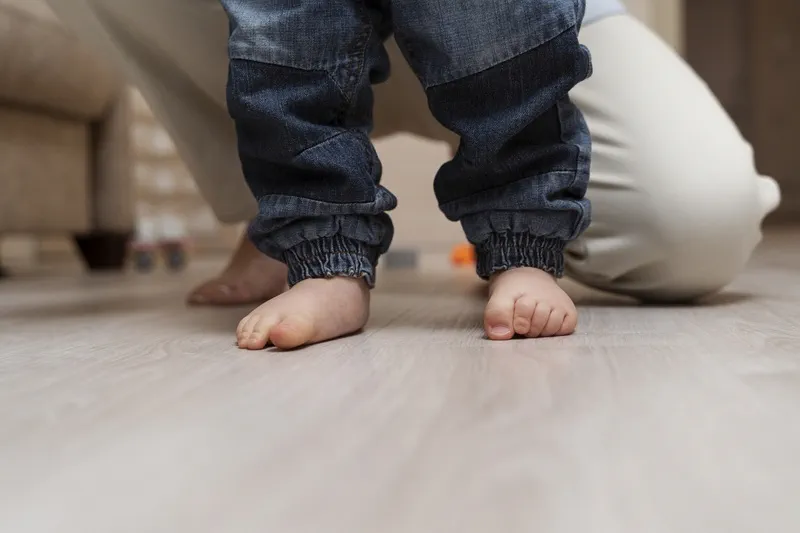
Most children with in-toeing or out-toeing:
- Walk, run, and play without pain.
- Have normal strength and coordination.
- Do not experience delays in motor milestones.
When to Watch for Problems:
- Persistent pain or limping.
- Tripping or frequent falls.
- Gait asymmetry (one foot turns more than the other).
- Stiffness, swelling, or difficulty moving the hip, knee, or foot.
- Gait that worsens or does not improve with age.
How Are In-Toeing and Out-Toeing Diagnosed?
A pediatrician or pediatric podiatrist will:
- Review your child’s medical and family history.
- Observe your child walking and running.
- Examine the alignment of the hips, legs, knees, and feet.
- Assess flexibility and range of motion.
- Rarely, order X-rays if a structural or neurological problem is suspected.
Treatment Options
Most children with in-toeing or out-toeing do not need treatment. These gait patterns usually resolve naturally as bones and muscles mature.
Home Care and Monitoring
- Encourage active play and normal participation in sports.
- Avoid restrictive footwear; choose shoes that fit well and allow natural movement.
- Discourage “W-sitting” if femoral anteversion is present.
When Is Treatment Needed?
- If gait issues cause pain, limit activity, or persist beyond age 8–10.
- If there is a significant difference between the two legs.
- If there are signs of an underlying neuromuscular or orthopedic condition.
Medical and Surgical Options
- Physical therapy for muscle strengthening and flexibility, especially if tightness or weakness is present.
- Orthotics or braces are rarely needed and not generally recommended for most children.
- Surgery is reserved for severe, persistent cases that do not improve and cause functional problems.
Frequently Asked Questions
Is in-toeing or out-toeing painful for children?
Most children experience no pain or discomfort. If pain develops, consult a healthcare provider.
Will my child outgrow in-toeing or out-toeing?
Yes, most children outgrow these gait patterns by age 8 without treatment.
Should my child wear special shoes or braces?
Special shoes, braces, or orthotics are rarely needed and have not been shown to speed up correction.
When should I worry about my child’s walking pattern?
Seek medical advice if your child has pain, limping, frequent falls, or if the gait problem persists into late childhood.
Can in-toeing or out-toeing lead to problems in adulthood?
In rare cases, untreated severe gait abnormalities can cause joint pain or arthritis later in life, but this is uncommon.
Prevention and Parental Tips
- Allow your child to walk barefoot on safe surfaces to encourage natural muscle development.
- Choose shoes with a wide toe box and flexible sole.
- Monitor your child’s gait as they grow, but avoid unnecessary interventions for normal variations.
- Schedule regular pediatric check-ups to track development.
When to See a Specialist
Contact a pediatric podiatrist or orthopedic specialist if:
- Your child’s gait causes pain, tripping, or limits activity.
- There is a noticeable difference between the two legs.
- The condition is not improving with age.
- There are signs of neurological or muscular disease (e.g., weakness, stiffness, or loss of function).
In-toeing and out-toeing in children are usually harmless and part of normal growth. Most cases resolve on their own as your child grows. However, if you notice pain, persistent gait problems, or developmental delays, a pediatric foot specialist can provide a thorough evaluation and peace of mind.
If you’re concerned about your child’s gait, contact us for personalized guidance. With patience and the right care, your child will stride forward with ease.
Looking for better foot support? We're just around the corner.
Call us today at
