
Hammer Toe Treatment in Toronto
Hammer Toes: Causes, Symptoms, and Effective Treatments
If you’ve noticed one or more of your toes stuck in a bent or curled position – especially the second, third, or fourth toe – you might be dealing with hammer toe.
While it may start as a mild nuisance, hammer toes can become painful, limit your mobility, and make wearing regular shoes difficult.
What Are Hammer Toes?
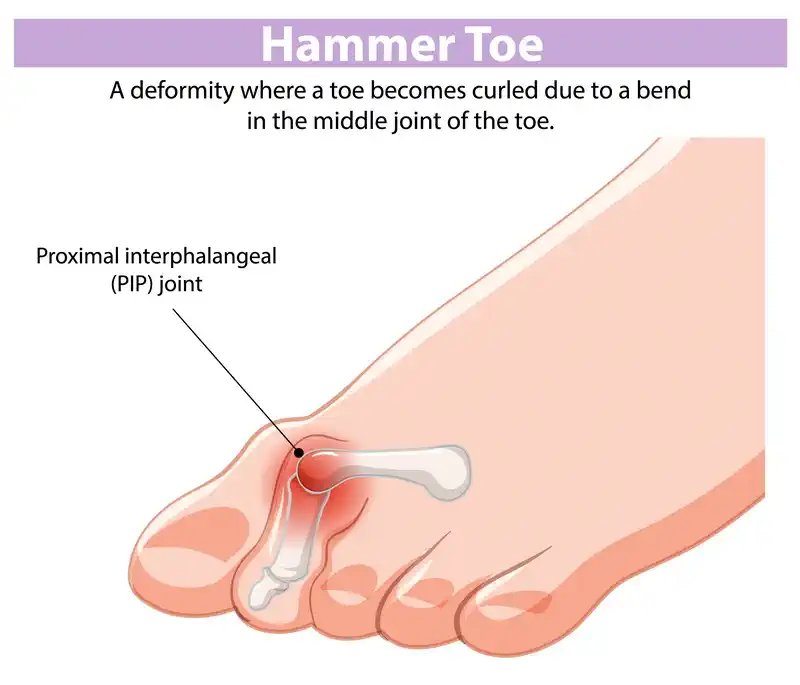
Hammer toe is a deformity where the middle joint of a toe bends downward, making the toe resemble a hammer. Most often, it affects the second, third, or fourth toes.
The condition may start out flexible (you can still move the toe) but can become rigid over time.
Key Symptoms:
- A toe bent downward at the middle joint
- Pain when walking or wearing shoes
- Corns or calluses on top of the toe
- Redness, swelling, or stiffness
- Difficulty moving the toe if the joint becomes rigid
What Causes Hammer Toes?
Hammer toes develop due to muscle, tendon, or ligament imbalances that bend the toe at the middle joint.
Risk Factors:
- Poor-Fitting Shoes: Tight, narrow, or high-heeled shoes force toes into unnatural positions
- Foot Structure: Flat feet, high arches, or long second toes create more stress
- Arthritis or Nerve Damage: Weakens toe control
- Injury or Trauma: Stubbed or broken toes may heal abnormally
- Genetics: Family history increases your risk
- Age and Gender: More common in adults, especially women
Your Feet Deserve Professional Care
Book your appointment today and take the first step toward healthier, pain-free feet.
How Common Are Hammer Toes?
Up to 20% of adults develop hammer toes, with the risk increasing with age. Women are more affected, often due to shoe choices.
Types of Hammer Toes
- Flexible Hammer Toe: Toe can still be moved at the joint. Early care may reverse it.
- Rigid Hammer Toe: The joint becomes immobile. Often requires advanced treatment or surgery.
Hammer Toe vs. Claw Toe vs. Mallet Toe
Hammer Toe
- Joint(s) Affected: Middle joint bends down
- Appearance: Bent at the middle joint like a hammer
Claw Toe
- Joint(s) Affected: Middle and end joints bend
- Appearance: Toe curls downward at both joints
Mallet Toe
- Joint(s) Affected: End joint bends down
- Appearance: Tip of the toe points downward
Home Treatments for Hammer Toes
If your hammer toe is still flexible, these steps can help manage symptoms:
1. Wear Roomy, Supportive Shoes
- Use wide toe boxes and soft uppers
- Avoid high heels or pointed shoes
2. Use Pads or Cushions
- Gel pads or corn cushions reduce friction
- Avoid medicated pads that may irritate skin
3. Stretch and Strengthen
- Gently pull the toe straight and hold
- Pick up marbles or towels with your toes
- Stretch calves and foot muscles regularly
4. Apply Ice
- Ice swollen or sore toes for 10–15 minutes after activity
Real-Life Tip:
Tom, a 58-year-old delivery driver, noticed his second toe curling. By switching to orthopedic shoes and doing daily exercises, he prevented further progression and stayed pain-free.

When to See a Podiatrist
Professional care is needed if:
- The toe is stuck in a bent position
- Corns or sores won’t heal
- Pain makes walking difficult
- You have diabetes or poor circulation
Treatment Options:
- Custom orthotics to correct alignment
- Splints or taping to reposition the toe
- Cortisone injections to reduce inflammation
- Surgery for rigid or severe cases
Modern surgical techniques are minimally invasive, and recovery is often quick with proper care.
Prevention Tips
- Wear shoes with enough room in the toe box
- Avoid high heels for everyday wear
- Do regular toe stretches and strengthening exercises
- Address any foot pain early with a podiatrist
Frequently Asked Questions About Hammer Toes
Can hammer toes go away on their own?
No. Early treatment can improve flexibility, but untreated cases may become permanent.
Do I need surgery?
Not always. Conservative care helps many, but surgery may be needed for rigid, painful toes.
Is hammer toe the same as claw toe?
No. Hammer toe involves one joint, claw toe affects both middle and end joints.
Can I still exercise with hammer toe?
Yes. Stick to low-impact activities and wear supportive shoes.
What happens if I ignore it?
The toe may become permanently stiff and harder to treat later.
Take the First Step Toward Pain-Free Feet
Hammer toes may start small, but left unchecked they can lead to long-term discomfort. The good news: with proper footwear, foot exercises, and early care, you can stay active and avoid surgery.
Ready to find relief from hammer toes?
Contact our clinic today to schedule your consultation and take the first step toward healthier, happier feet!
Looking for better foot support? We're just around the corner.
Call us today at
